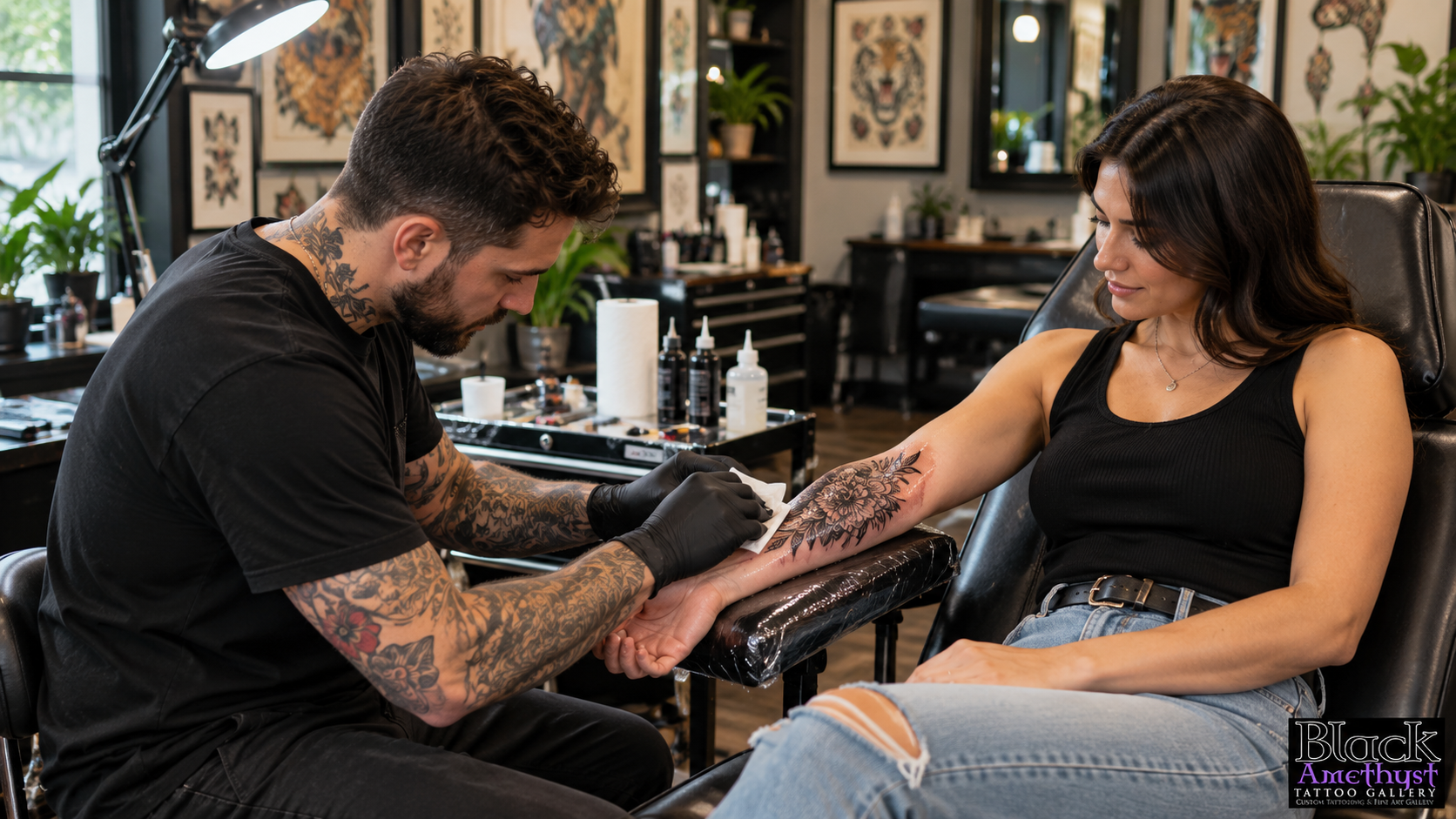
Pregnancy can make you want to mark a meaningful moment with something permanent. But if that means getting a new tattoo, waiting is the safer choice.
So, can you get a tattoo while pregnant? There is limited research on tattooing specifically during pregnancy, and getting tattooed involves breaking the skin and introducing ink into the body. That creates avoidable risks, including infection and reactions to tattoo ink. The American Pregnancy Association recommends waiting until after the baby is born, while the FDA warns that tattooing in general can lead to infections, allergic reactions, and other complications.
Here at Black Amethyst Tattoo Gallery, we believe a tattoo should be something you can enjoy without taking an unnecessary health risk. Pregnancy is temporary. Your tattoo can wait.

Key Takeaways
- It is generally better to postpone a new tattoo until after pregnancy because pregnancy-specific tattoo safety data are limited.
- Any tattoo breaks the skin, which creates a risk of bacterial infection and exposure to blood-borne infections if proper procedures are not followed.
- Tattoo ink itself can also become contaminated; the FDA has found microorganisms even in some sealed tattoo inks.
- The FDA has not approved color additives for injection into the skin for cosmetic tattooing.
- Pregnancy-related stretching can change how a tattoo looks, especially on areas such as the abdomen and breasts.
- If you were tattooed before realizing you were pregnant, contact your prenatal healthcare provider if you have concerns or notice signs of infection.
Why Is Getting a Tattoo While Pregnant Usually Not Recommended?
Getting tattooed during pregnancy is generally discouraged because it creates risks that can be avoided simply by postponing the appointment.
A tattoo needle repeatedly penetrates the skin and deposits pigment below the surface. Even in a clean, professional setting, tattooing creates an open wound that has to heal. The FDA lists infection and allergic reactions among the known risks associated with tattoos.
For someone who is not pregnant, those risks are part of the normal decision involved in getting tattooed. During pregnancy, there is another person to consider, and there simply is not enough pregnancy-specific evidence to establish that tattooing presents no additional risk to a developing baby.
That changes the risk-versus-benefit calculation. A tattoo is elective and can be postponed.
What Are the Main Risks of Getting a Tattoo While Pregnant?
Infection Is the Biggest Practical Concern
Tattooing creates an infection risk because the procedure breaks the skin barrier.
Poor sanitation, contaminated equipment, reused needles, or contaminated ink can introduce bacteria or transmit blood-borne infections. The FDA specifically lists illnesses such as hepatitis and HIV among potential risks associated with unclean tattoo tools, products, or practices.
A reputable tattoo studio takes extensive precautions to reduce these risks. Sterile practices matter every time someone gets tattooed.
They do not, however, make the risk mathematically zero.
For an elective tattoo during pregnancy, avoiding that risk entirely by waiting is the more cautious option.
Even Sealed Tattoo Ink Can Become Contaminated
Clean needles are only part of tattoo safety. The ink itself matters.
The FDA has documented microbial contamination in tattoo inks, including products in sealed bottles. In May 2025, the agency warned consumers and tattoo professionals about specific tattoo inks found to contain pathogenic microorganisms.
That is an important distinction. A professional artist may follow careful hygiene procedures, but contamination can sometimes originate earlier in the ink manufacturing or distribution process.
For pregnant clients, this is another reason to avoid an elective procedure until later.
Tattoo Ink Safety During Pregnancy Has Not Been Well Established
There is not enough research to say that tattoo pigments are safe for a developing fetus.
The American Pregnancy Association notes that little information is available about the effects of tattoo dyes during pregnancy. The FDA also states that no color additives are approved for injection into the skin for cosmetic tattooing.
That does not mean a tattoo automatically harms a fetus.
It means the evidence needed to confidently establish safety is lacking. When a procedure is optional and the unanswered questions can be avoided by delaying it, waiting makes more sense.
Allergic Reactions Can Happen
Tattoo pigments can cause allergic reactions, including rashes and other skin problems. Some reactions may appear soon after tattooing, while others can occur later.
A reaction that might normally be inconvenient becomes more complicated during pregnancy because treatment decisions may also need to account for the pregnancy.
Again, the issue is not that a reaction is guaranteed. It is that the tattoo can easily be postponed until there are fewer variables involved.
Can Pregnancy Change the Appearance of a New Tattoo?
Yes. Skin stretching and other body changes during pregnancy may alter how a tattoo looks, depending on where the tattoo is placed.
The abdomen is the obvious example, but changes can also affect the breasts, hips, thighs, and other areas.
How much a tattoo changes depends on factors such as:
- Where the tattoo is located
- How much the skin stretches
- Changes in body size and shape
- The design’s size and placement
- How the skin settles after pregnancy
Some tattoos may return close to their previous appearance. Others may look stretched, shifted, or slightly distorted.
For a detailed custom piece, waiting also gives your artist a more stable canvas to work with.
What If You Already Got a Tattoo Before Knowing You Were Pregnant?
Getting a tattoo before realizing you were pregnant does not automatically mean something is wrong.
Do not assume that exposure means your pregnancy has been harmed. Instead, pay attention to how the tattoo is healing and let your prenatal healthcare provider know if you have concerns.
Signs that deserve medical attention include increasing redness, worsening pain, unusual swelling, drainage, a rash that keeps spreading, or fever. The FDA advises contacting a healthcare professional when a tattoo does not appear to be healing normally, particularly if fever develops.
If you have concerns about the sanitation practices used where the tattoo was performed, mention that to your healthcare provider as well.
What If the Tattoo Appointment Was Already Booked?
If you discover that you’re pregnant after scheduling a tattoo, the safest practical move is to postpone the session.
That can be frustrating if you have already spent months planning the design or waiting for an appointment. But postponing gives you the chance to get the tattoo when pregnancy is no longer part of the health decision.
Use the extra time well.
You can refine the artwork, rethink placement, collect reference images, or work through ideas with your artist so the final piece is ready when the timing is right.
A great tattoo does not become less meaningful because you waited for it.
Does the Trimester Make a Difference?
There is not enough evidence to identify a trimester in which elective tattooing can be considered clearly safe.
The American Pregnancy Association specifically notes uncertainty about tattoo dyes during pregnancy and recommends waiting until after birth.
That means moving the appointment from the first trimester to the second or third does not eliminate the basic concerns.
The tattoo still involves:
- Broken skin
- A healing wound
- Potential exposure to infection
- Tattoo pigments with limited pregnancy-specific safety information
Waiting until pregnancy is over avoids those questions rather than trying to find a supposedly safer window within the pregnancy.
Can You Get a Tattoo While Breastfeeding?
The evidence here is also limited.
The National Library of Medicine’s LactMed database states that there are no available data establishing the safety of tattooing during breastfeeding. It notes theoretical concerns involving infection and pigments and says published opinion has tended to favor postponing new tattoos while breastfeeding.
That is different from saying tattooing during breastfeeding has been proven harmful.
There simply is not strong enough evidence to give every breastfeeding parent the same definitive timetable.
If you want a tattoo after giving birth but are breastfeeding, discuss your circumstances with your healthcare provider and your tattoo artist before booking.
Are Temporary Tattoos or Henna Safer During Pregnancy?
Temporary body art avoids needles, but that does not mean every temporary tattoo or henna product is automatically safe.
Particular caution is needed with products marketed as “black henna.” The FDA says these products may contain p-phenylenediamine, or PPD, which can cause dangerous skin reactions in some people. PPD is not permitted in cosmetics intended for application to the skin.
Even products marketed as ordinary henna can contain added ingredients, so do not rely on the word “natural” alone as proof of safety.
If you want temporary body art during pregnancy, check the ingredients carefully and ask your healthcare provider about any product you’re considering using.
Why Waiting Can Actually Help You Get a Better Tattoo
Health comes first, but there is also an artistic reason to give yourself some time.
A custom tattoo benefits from thoughtful placement. Pregnancy can temporarily change the size, shape, and tension of the skin, which can make it harder to predict how a design will ultimately sit on the body.
Waiting allows those changes to settle.
It also gives you more time to think about:
- Exact placement
- Design size
- Color versus black and gray
- Fine-line versus bolder work
- How the tattoo will interact with existing pieces
- Whether the idea should become part of a larger sleeve or composition
At Black Amethyst Tattoo Gallery, we would rather see a meaningful idea become the right tattoo at the right time than rush a permanent piece because an appointment happens to be available.
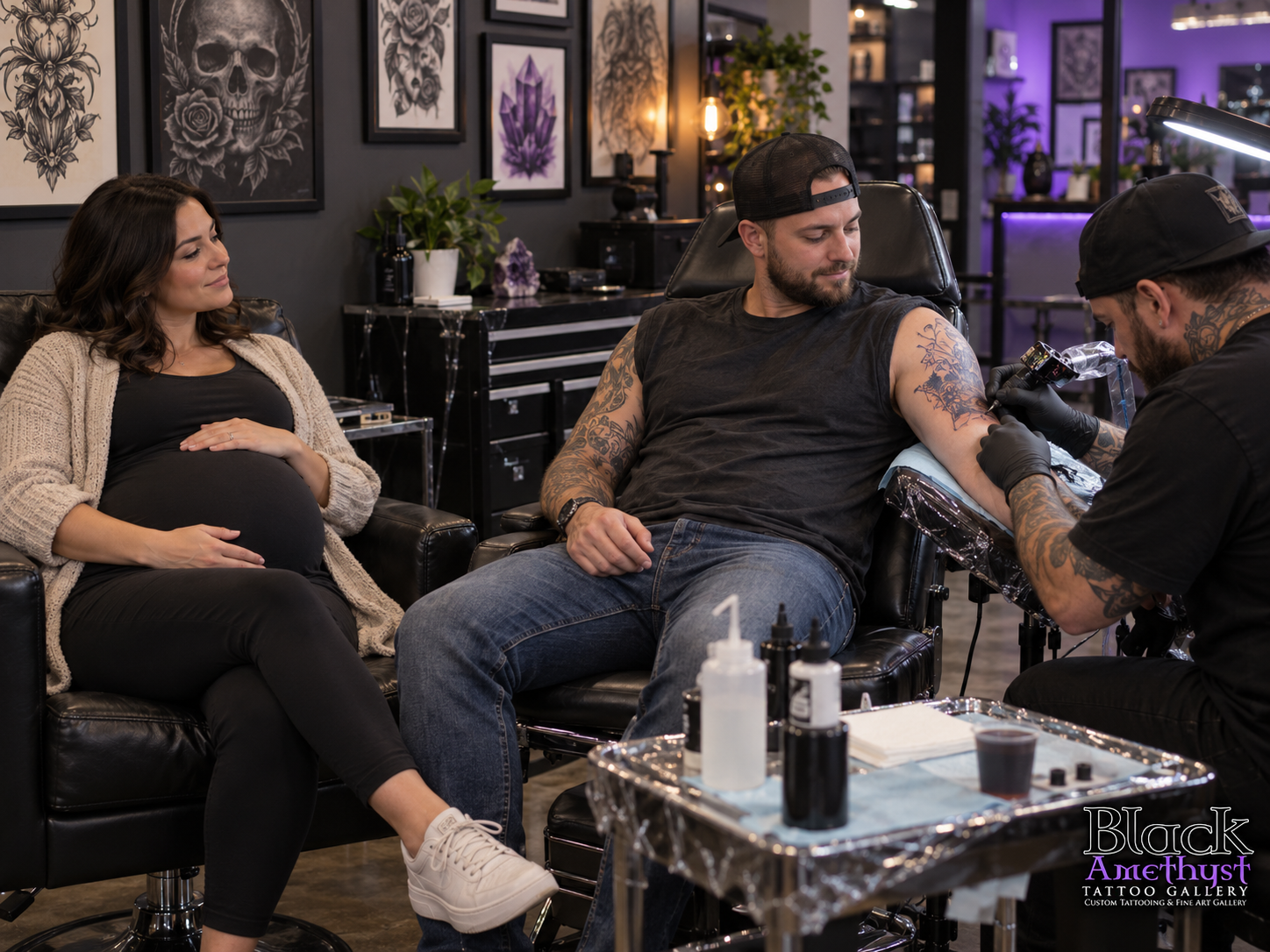
Planning Your Tattoo After Pregnancy
Once you’re ready to revisit the idea, bring your references and thoughts to your tattoo artist.
At our Black Amethyst Tattoo Gallery in St. Petersburg studio, we create custom work across styles including sleeve tattoos, cover-ups, Japanese tattoos, traditional tattoos, vibrant color pieces, cartoon-inspired designs, and fine-line work.
If your pregnancy inspired the tattoo, waiting can sometimes make the design even more personal. You may want to incorporate a birth flower, meaningful date, symbol, illustration, or another detail that only becomes clear after your child arrives.
The additional time does not have to put the creative process on hold. It can become part of it.
Frequently Asked Questions
Q: Can you get a tattoo while pregnant if the tattoo shop is sterile?
A: A clean, professionally operated studio reduces many preventable tattooing risks, but it cannot eliminate every risk. Tattooing still breaks the skin, and contaminated ink can sometimes cause infection even when hygienic procedures are followed. Pregnancy-specific research on tattoo pigments is also limited.
For those reasons, postponing an elective tattoo until after pregnancy is generally the more cautious choice.
Q: Can you get a small tattoo while pregnant?
A: A smaller tattoo still requires needles to penetrate the skin and ink to be deposited beneath it. Although the amount of tattooing may be smaller, the basic concerns involving infection, allergic reaction, and limited pregnancy-specific safety information still apply.
Size does not turn tattooing during pregnancy into a risk-free procedure.
Q: Can you get a tattoo during the second trimester?
A: There is no well-established trimester in which elective tattooing has been proven safe. Moving a tattoo appointment to the second trimester does not remove the risks associated with broken skin, infection, reactions, or limited data about tattoo pigments during pregnancy.
Q: Can tattoo ink reach the baby?
A: Research is not sufficient to give a simple yes-or-no answer about the effects of tattoo pigments during pregnancy. That uncertainty is one reason organizations such as the American Pregnancy Association recommend postponing tattooing until after birth.
Q: Can I get an epidural if I have a lower-back tattoo?
A: Having an existing lower-back tattoo does not automatically mean you cannot receive an epidural. The American Pregnancy Association notes that available studies have not conclusively shown a risk simply from having a back tattoo, although individual hospital or anesthesia policies may vary.
Ask your obstetric and anesthesia team if you have concerns about your specific tattoo or planned delivery.